One Teen, Two Houses, One Set Of Driving Rules
Wet leaves, dark commutes, and a driver with three months of experience. A shared rules framework two households can agree on before the rain starts.
Part 3 of 4 in the series Two Homes, One Teen Driver: The Kirkland Co-Parent's Insurance and Liability Guide.
Parts one and two of this series dealt with paperwork: whose policy names your teen, and whose name sits on the title of the car they drive. Those decisions protect your money. This one protects your kid.
You can have flawless coverage and perfect titling and still hand the keys to a 16-year-old who has never driven 405 in the dark during a downpour, has never been told what to do when a passenger starts filming, and has quietly figured out that Mom's curfew ends where Dad's driveway begins. This series was developed with insights from Mooshekh Law Firm, whose work with families after serious collisions surfaces the same pattern again and again: the rules were never the problem, the gap between two households was.
So this is a framework for the conversation two parents need to have with each other first, then with the teen, before October turns the Eastside dark at 4:30 in the afternoon.
Rain Does Not Cause Crashes. Inexperience In Rain Does.
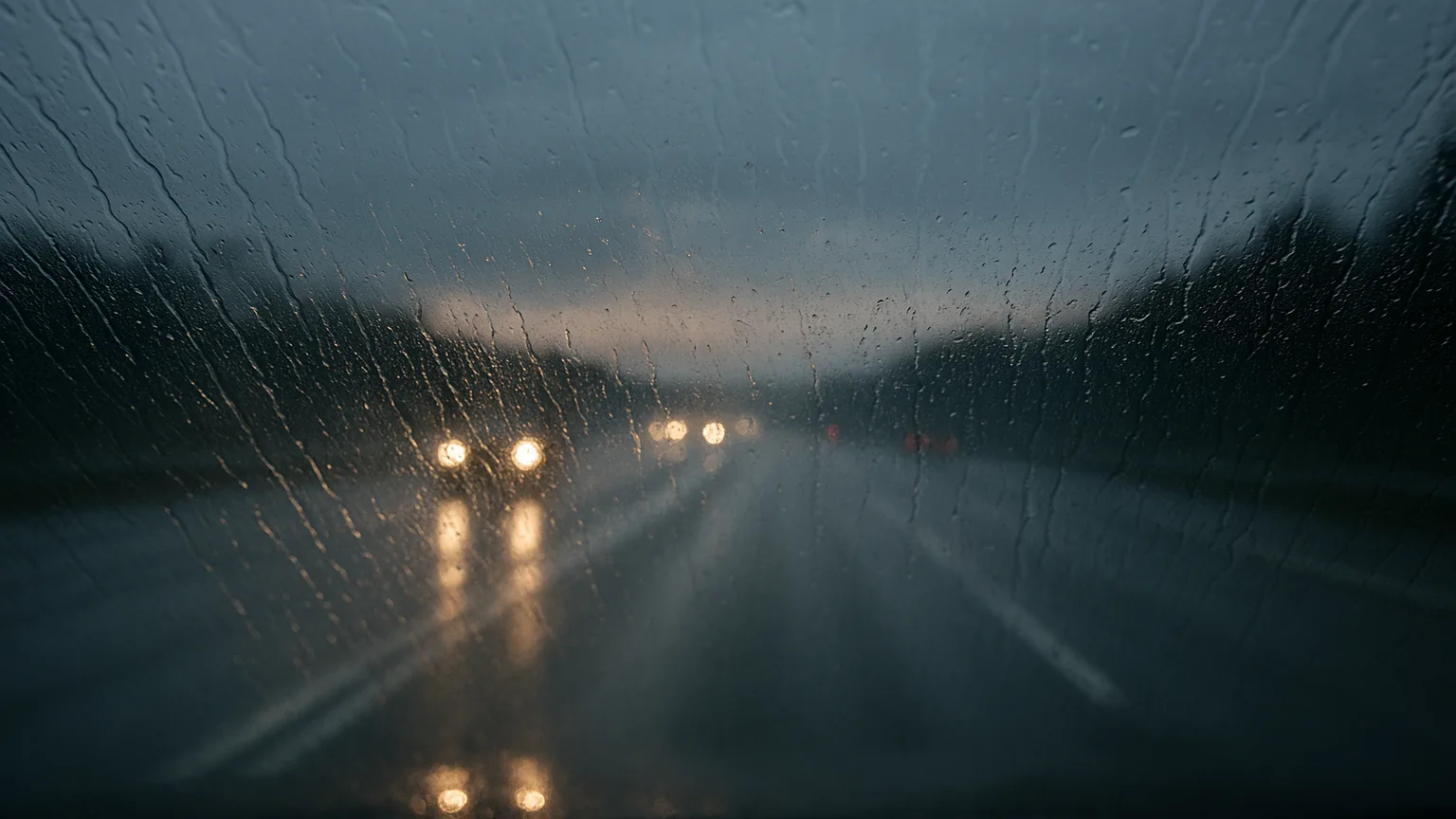
An experienced driver has muscle memory for wet roads: they lift off the gas earlier, they know painted crosswalk lines get slick, they leave a gap they cannot explain but can feel. Your teen has twelve months of driving, most of it in daylight on roads they know. Then the season flips and every input changes at once:
- Stopping distances stretch on wet asphalt, and the following distance that felt generous in August is now tailgating.
- Glare and headlight scatter on I-405 and Highway 520 make lane lines vanish in truck spray.
- Dark commutes turn the drive home from practice or a shift at the mall into a night drive, a completely different skill.
- Leaves and standing water collect at the edges of curving roads through Juanita and Finn Hill, exactly where a new driver drifts.
- Snoqualmie Pass trips add elevation, chains, and traffic that stops without warning.
None of that is fixed by a lecture. It is fixed by supervised repetitions in bad conditions, which means both parents have to agree to spend the hours.
Every Kirkland family situation is different
A short conversation about your parenting plan, support numbers, or property split usually clears up more than an afternoon of reading. We serve Kirkland, Juanita, Totem Lake, Houghton, Rose Hill, and the wider Eastside.
Building A Rulebook Both Houses Enforce
The Six Rules Worth Fighting Over
Most co-parents already have driving rules. The problem is that they have two sets, and the teen has learned to shop between them. A rule that only exists at one address is not a rule, it is a suggestion with a schedule. Pick six things and make them identical in both homes; everything else can vary.
1. Night Driving Curfew
Washington's intermediate license already restricts late driving, and that floor is a starting point rather than a ceiling. Agree on one time, and agree it does not move because it is a Friday at the other parent's house. If a job requires later driving, that becomes a named exception both parents know about, not a favor granted in the moment.
2. Passengers
Crash risk climbs sharply with each teenage passenger. The state limits passengers for the first year of an intermediate license, and plenty of families extend it. Write down who is allowed in the car and for how long. Siblings, teammates, one friend, nobody after dark. Be specific enough that there is nothing to argue about at a curb.
3. Phones, Fully Out Of Reach
"Hands free" is not a teen rule. Glance-free is. The phone lives in the glovebox or a bag in the back seat, navigation is set before the car moves, playlists are chosen in the driveway. Both parents should also agree not to call or text a teen they know is driving, which is the rule most parents break first.
4. Highways And The Pass
Merging onto 405 at speed is a learned skill, and so is a wet drive over Snoqualmie. Decide together which roads are approved, and require a supervised run in bad weather before a road is unlocked.
5. Weather Stand-Down
Give your teen a no-fault exit. Snow, ice, wind, or a downpour they do not feel ready for means either parent picks them up or pays for a ride, no argument and no cost to them. Teens drive in conditions they should not because the alternative is a lecture or a stranded friend.
6. The Honesty Clause
A scrape, a curb hit, a near miss, or a ticket gets reported the same day to both parents, and the consequence for reporting is always smaller than the consequence for hiding. Attorneys at car accidents practices see how much damage a delayed disclosure does to a claim: a teen who hid a fender bender for a week has usually also skipped the photos, the exchange of information, and the police report.
"The teens who come out of a collision in the best position are the ones who were told exactly what to do before it happened, by both parents, using the same words," says Rana Mooshekh, managing attorney at the firm.
Not sure how this applies to your case?
King County judges have wide discretion, and the facts that matter are rarely the ones people expect. Bring your questions and get a straight answer about where you stand.
Money, Documentation, And What Comes Next
Decide Who Pays What Before Anyone Needs To Know
Nothing sours a co-parenting relationship faster than an unexpected bill with a teenager's name on it. Settle the money while everyone is calm: the premium increase for adding a teen driver, which you can split or trade against something else in the parenting plan as long as you name a number; the deductible, which depends on whose vehicle and whose policy responds and is exactly where don't let the title decide stops being theoretical; fuel, tabs, tires, and maintenance, because rainy season makes wipers and tread depth non-optional; tickets and traffic school; and the teen's own share, since a modest contribution from a part-time job changes how a 16-year-old thinks about a car.
Write It Down So It Survives Both Households
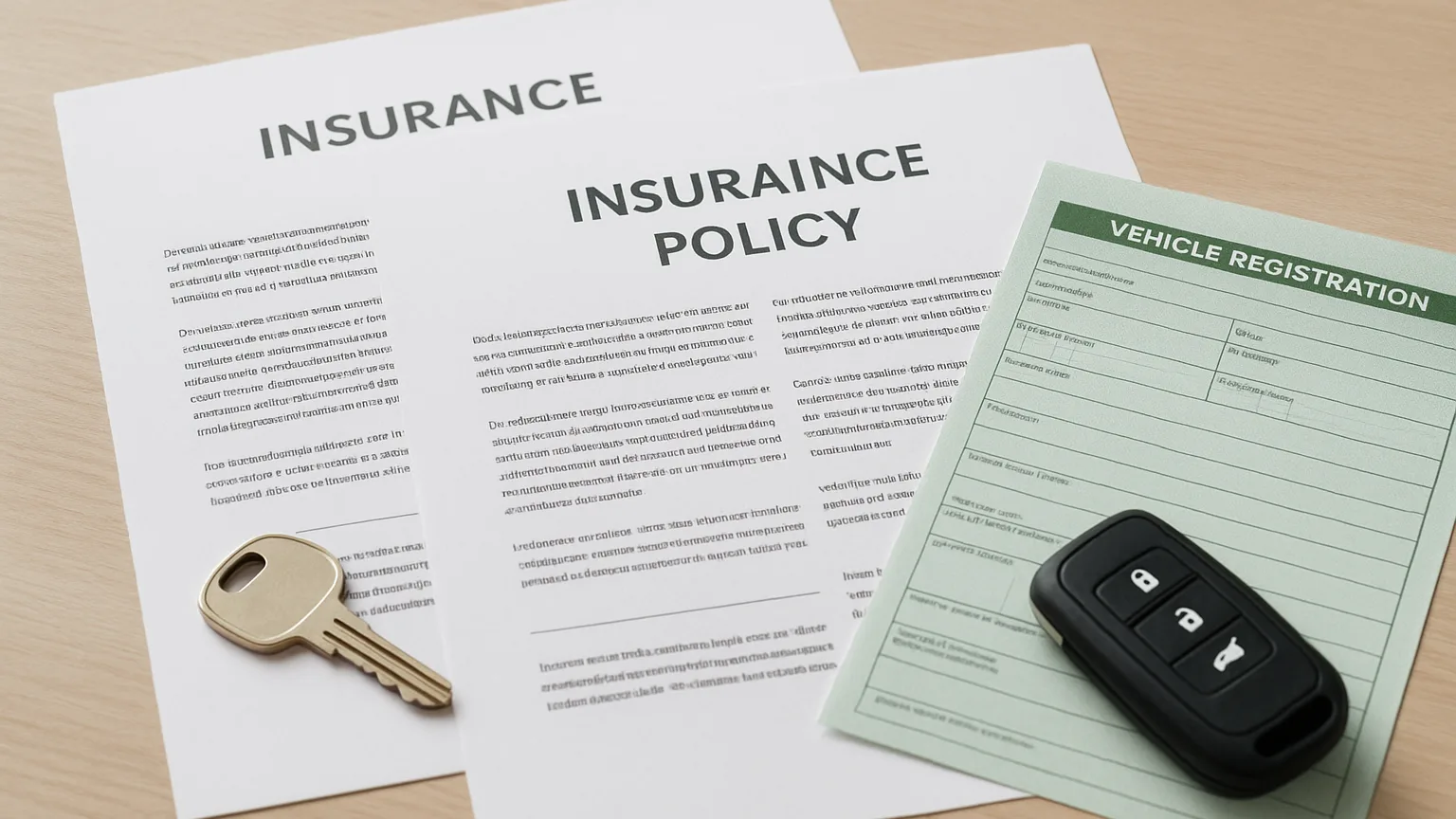
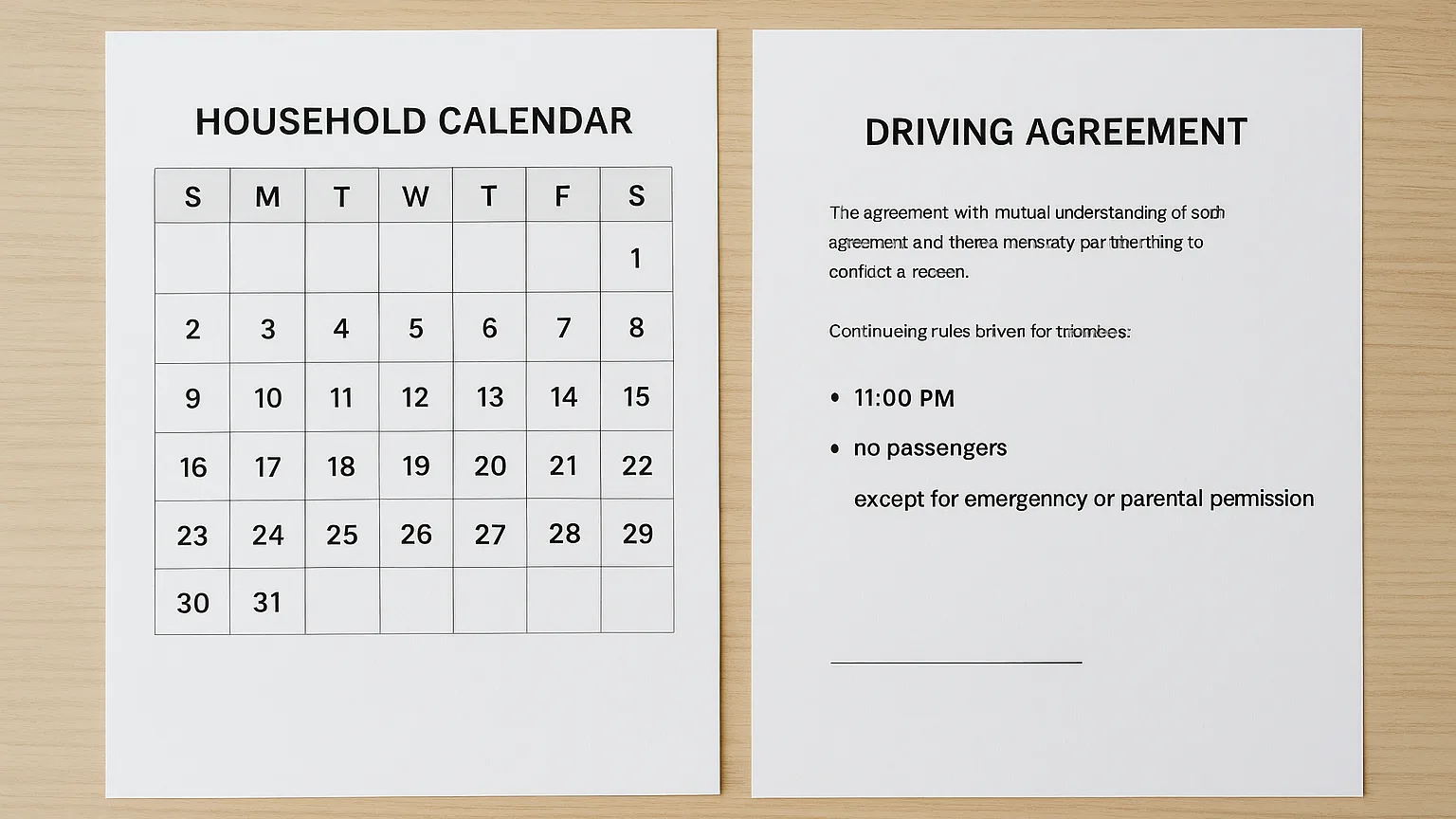
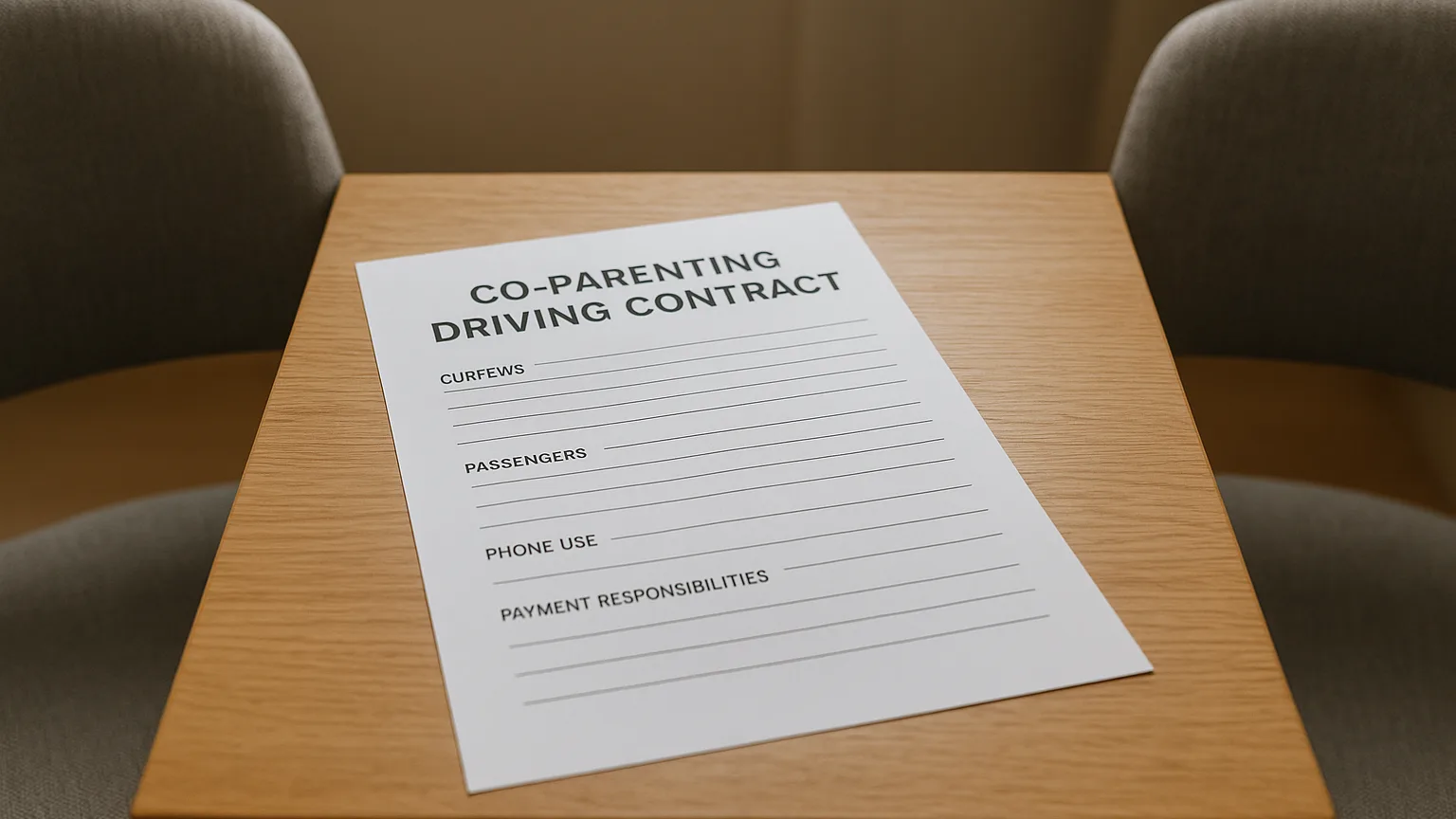
A verbal agreement between co-parents lasts until the first inconvenient Saturday. Put the rules in a one-page document, signed by both parents and the teen, with an identical copy at each house and a photo of it on the teen's phone. Then make the practical details portable: both parents' phone numbers, the insurance card and declaration page for every vehicle the teen might drive, and confirmation of which policy actually lists them, which is the whole point of before the permit turns and worth re-verifying each renewal. Store all of it in the glovebox of every car, not just the one at the primary address. The test is simple: if your teen calls at 11 p.m. from a wet parking lot in Totem Lake, does either parent know what to do without checking with the other?
The Conversation Is Cheaper Than The Alternative
A shared rulebook lowers the odds of a serious crash, and if one happens anyway it gives you a clean record that both parents set boundaries and checked competence rather than handing an inexperienced driver a car and a shrug. That distinction matters when someone starts asking whether a parent should have known better. It still will not tell you what to do in the panicked hour after the phone rings. That is where this series goes next: the scene, the police report, the medical documentation, and the notice both insurers need, all covered in first 72 hours after. Read it before you need it, because the decisions that shape a claim get made in the first night, not the first week.
Co-parenting a new driver through a Northwest winter is not really an insurance problem or a legal problem. It is a coordination problem: two households, two cars, two sets of instincts, and one teenager deciding which version of the rules applies tonight. When the rules match, a teen stops negotiating and starts driving; when they do not, the gap between two driveways becomes the place where curfews, passenger limits, and phone bans quietly stop existing. Agree on six rules, agree on who pays for what, sign one page, and put a copy in every glovebox. The paperwork from the first two parts protects your assets; this part protects the person driving.